
Porch notes
- Sevier Park opened in 1948 on the estate of the Sunnyside house, which today houses the Metropolitan Historical Commission and the Historic Zoning Commission.
- Nearby Belmont-Hillsboro was subdivided in 1890 and 1891 and grew as a streetcar suburb after a line opened on Belmont Boulevard in 1901.
- In neighborhood conservation overlays, new construction, additions, demolition and relocation are reviewed.
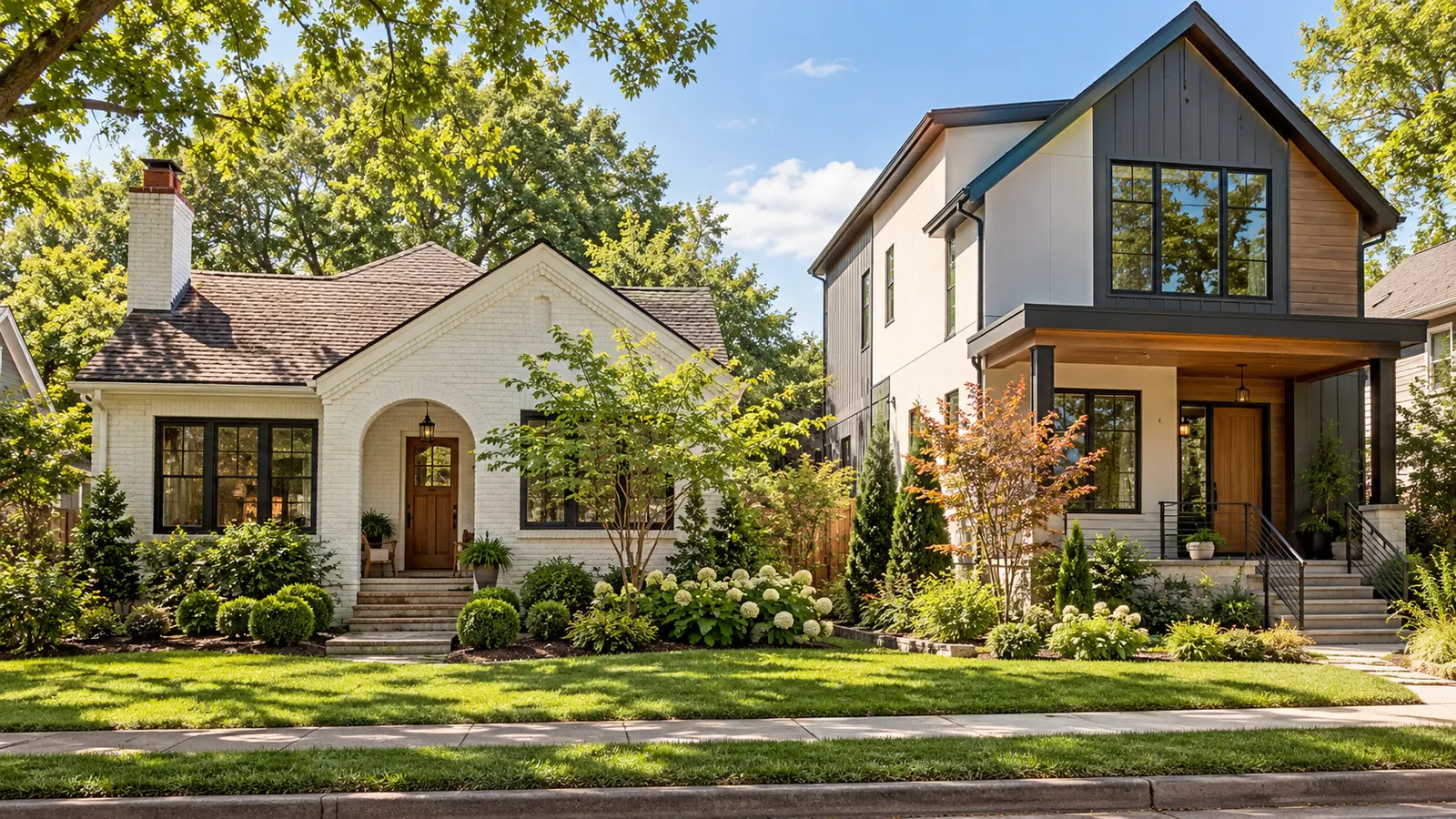
12South takes its name from 12th Avenue South, a corridor of shops and restaurants a few miles south of downtown. The streets around it hold cottages and bungalows from the early 20th century, more and more of them now standing beside tall new houses. It is popular, walkable and pricey, and it is a good place to learn how Nashville handles old houses and new construction side by side.
Sevier Park and Sunnyside
The neighborhood’s park has a long history. According to Metro Parks, the estate passed through several owners, including a prominent dentist who called it Idlewild. In 1927 Granville Sevier bought 20 1/2 acres and brought his mother back to the house she had named Sunnyside. He renovated it, adding brick wings and a stone office. After his death in 1945, his heirs sold the property to the city, and Sevier Park opened in 1948.
A major restoration of Sunnyside was completed in 2004. Fittingly for a neighborhood full of old houses, the mansion is now home to the Metropolitan Historical Commission and the Metropolitan Historic Zoning Commission. The park also has a community center run by Metro Parks.
Streetcar suburbs
The area grew as one of Nashville’s streetcar suburbs. The guidelines for the nearby Belmont-Hillsboro conservation overlay describe the pattern: the oldest sections were subdivided in 1890 and 1891, and in 1901 a land company secured a franchise for a street railway on Belmont Boulevard, speeding development. Building continued for decades, with some southern portions built around 1940. The result is a mix of bungalows, cottages, American foursquares and Tudors, with some Prairie and revival styles.
From the 1970s, the guidelines say, residents and newcomers came to value these houses for their closeness to three universities, parks, hospitals and shopping. A large part of Belmont-Hillsboro is listed in the National Register of Historic Places.
Overlays and infill
Some streets around 12South are in neighborhood conservation overlays, such as Belmont-Hillsboro and Waverly-Belmont, while others are not covered at all. That difference matters:
| If the lot is… | What to expect |
|---|---|
| Inside a conservation overlay | New construction, additions, demolition and relocation are reviewed by the Historic Zoning Commission |
| Outside any overlay | Ordinary zoning and building permits apply, without historic design review |
This is why some blocks keep a consistent row of cottages while others have changed quickly. If you are buying a cottage and wonder what could be built next door, or you plan to add on yourself, check Metro’s Parcel Viewer and read Historic Overlays in Nashville: What They Mean When You Buy an Old House.
Tip: When you look at a new house, ask the builder whether it went through historic review. A design approved under an overlay has already been judged against the street; one outside an overlay may sit next to more new construction soon.
Old houses and Nashville weather
Cottages from the streetcar era were built before central air and modern insulation, and Nashville’s climate tests both. Federal normals for the airport show July highs around 91 degrees, with about 18 days at 90 or above that month, while January averages lows near 30 degrees, about 19 nights at or below freezing and 2 inches of snow. Ask about the age of the heating and cooling system, insulation in the attic and crawl space, and whether pipes in an unheated crawl space are protected.
Taxes after the 2025 reappraisal
In popular neighborhoods, the countywide reappraisal can change a tax bill sharply. The Assessor of Property revalued every property in Davidson County as of January 1, 2025, and the next reappraisal is planned for 2028. Residential property is taxed on 25 percent of appraised value. Using the Trustee’s Urban Services District rate of $2.814 per $100, a house appraised at $900,000 would owe about $6,332 a year. See Davidson County Property Taxes: How Your Nashville Tax Bill Is Figured for appeals and relief programs.
Short-term rentals
Many 12South buyers ask about renting a backyard unit or a room to visitors. Metro allows owner-occupied short-term rental permits where the owner lives on the property, with up to four sleeping rooms rented to a single party. New permits for properties the owner does not live in are not allowed in standard residential zoning such as R and RS. Existing non-owner permits do not transfer to a new owner. Check the address in Metro’s eligibility viewer before counting on rental income.
Practical checks
- Read the seller’s disclosure statement, required under Tennessee law, especially for older homes.
- Check drainage on the lot. Heavy rain is common in spring; Nashville’s normals show about 5 inches in May.
- Ask whether the house shares a lot with a second unit and how ownership is divided.
Who it suits
12South suits buyers who want a walkable neighborhood with shops and a historic park, and who accept higher prices and nearby construction. For a quieter suburban feel with larger lots, see Buying a Home in Green Hills: Big Lots, Design Overlays and Radnor Lake.