
Porch notes
- Germantown’s German community began flourishing in the 1840s; the historic district was listed in the National Register in August 1979.
- Industrial zoning was imposed on the neighborhood in the 1950s; residents later worked with Metro to create a mixed-use zoning category.
- Bicentennial Capitol Mall State Park, a 20-acre park beside Germantown, opened in 1996 for Tennessee’s bicentennial.
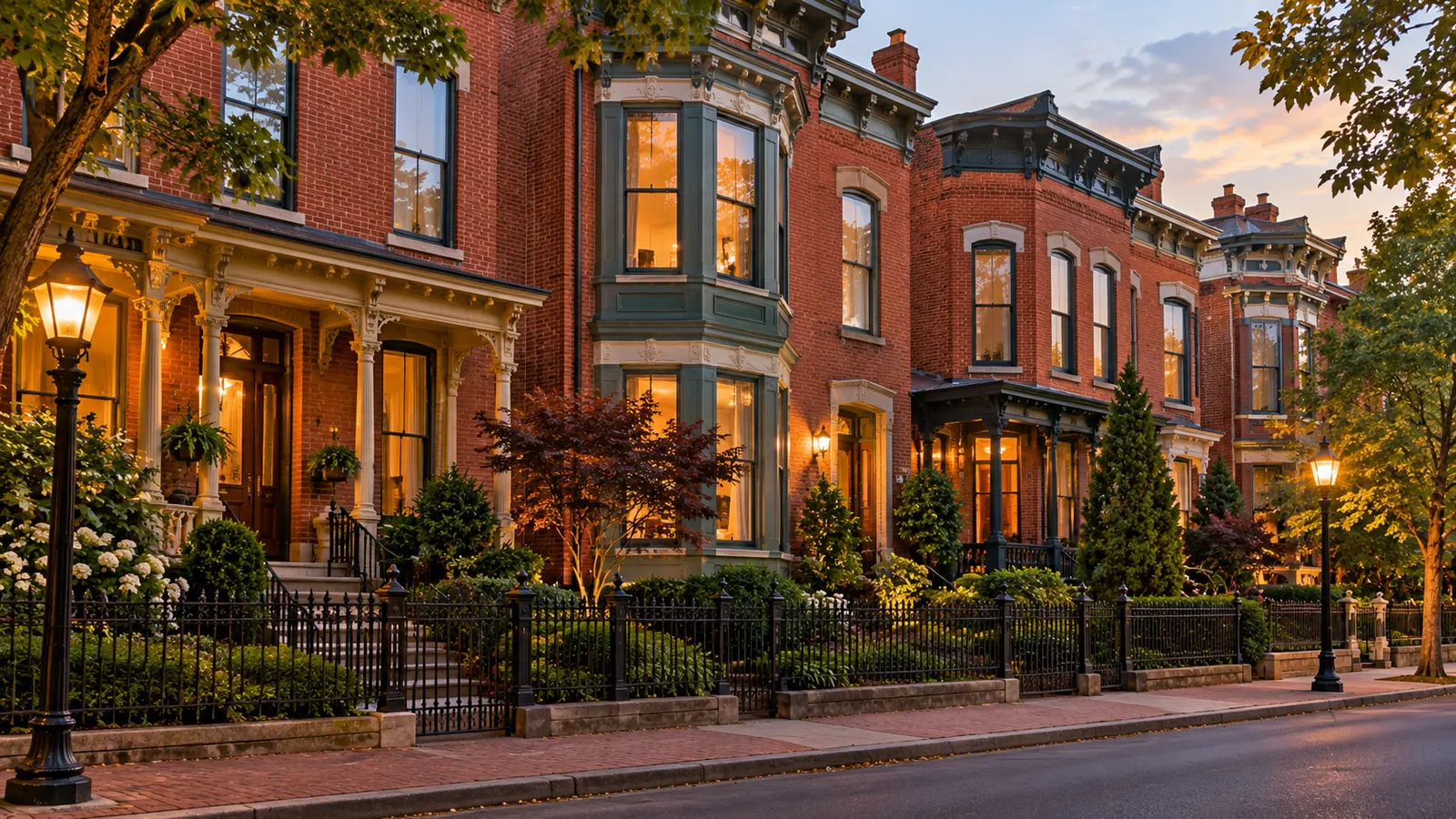
Germantown sits a few blocks north of downtown and the State Capitol, between Jefferson Street and the Cumberland River. Houses built from the 1840s to the 1920s share its streets with commercial buildings and new townhomes. For buyers it offers something rare in Nashville: a walkable, historic neighborhood within a short walk of the city center.
A neighborhood that nearly disappeared
The Metro Historic Zoning Commission’s Germantown guidelines include a short history. The German community began to flourish in the 1840s, mixing with Irish, Italian, Swiss and Jewish neighbors. Churches held services in German. In the 1870s a second wave of immigrants arrived, and North Nashville became the center of German immigration in Tennessee.
Decline began around 1915. Streetcars and cars let residents move farther from the center, and larger meatpacking plants along the river crowded out the residential feel. Many houses became rentals and rooming houses. In the 1950s, industrial zoning was put over the old neighborhood, and buildings were torn down or altered.
The revival
Studies by the Metropolitan Historical Commission in the 1970s found that many structures were still sound and the architecture exceptional. The eight-block historic district, with houses built between the 1840s and the 1920s, was listed in the National Register of Historic Places in August 1979. Revitalization began in earnest in 1980, when two historic churches started an Oktoberfest that became one of Middle Tennessee’s popular celebrations.
Residents formed a neighborhood association and worked with the Metro Planning Commission to create a mixed-use zoning category, because none of the existing categories fit a place where homes and businesses sit side by side. The guidelines note that this tool later became popular well beyond Germantown.
The preservation overlay
Germantown is one of Nashville’s Historic Preservation Zoning Overlays, the stricter of the two main overlay types. The design guidelines explain that construction has gone on continuously since the mid-19th century and that new buildings should fit the pattern and rhythm of the street. They also discourage imitation of historic styles: a new building may be contemporary in design as long as its type suits the context.
If you are buying a historic house, expect exterior changes to need review. If you are buying a new townhome, the design was likely reviewed already, but later changes to its exterior may be too. Details are in Historic Overlays in Nashville: What They Mean When You Buy an Old House.
Next door: Bicentennial Capitol Mall
Tennessee developed Bicentennial Capitol Mall State Park in 1996 to preserve the view of the State Capitol, and it borders Germantown. Tennessee State Parks describes it as a 20-acre urban park. Among its features:
- A World War II memorial honoring 5,731 Tennesseans who died in the war.
- A water feature of 31 fountains representing the state’s major rivers and lakes.
- A carillon with a bell for each of the state’s 95 counties, chiming every 15 minutes.
- A bike-share station along 7th Avenue.
The state notes that capital improvement work may close parts of the park at times. As part of the Bicentennial Mall project, the old farmers market was closed and new facilities were built nearby.
Change on the edges
The North Nashville Community Plan includes a supplemental policy for the riverside Neuhoff property area, allowing more intensity while improving the Cumberland River and its greenway. The Salemtown conservation overlay lies nearby. Expect continued construction around the neighborhood’s edges.
Questions to ask
- Is the property inside the Germantown overlay, and what work did previous owners have approved?
- Is it a single-family house, a townhome in a horizontal property regime or a condo? That affects association rules and short-term rental options.
- What does the zoning allow next door? In a mixed-use area, a vacant lot can become a commercial building.
- Has the property ever flooded? Check flood maps for areas closer to the river.
- What is the current appraisal after the 2025 reappraisal?
Tip: Mixed-use zoning is part of Germantown’s charm and the main source of surprises. Walk the blocks around a house at night and on a weekend to see how restaurants and events affect the street.
Older buyers should know about Metro’s tax freeze. Homeowners 65 and older with 2025 household income up to $63,470 can lock their property tax at the amount for the year they qualify, even if rates rise later. In a neighborhood where values have climbed, that can matter a great deal over time.
Short-term rentals in mixed-use areas
Because Metro allows new not-owner-occupied short-term rental permits only in certain mixed-use, commercial and downtown zoning districts, Germantown’s zoning may matter if renting is part of your plan. Check the specific address in Metro’s eligibility viewer and read Short-Term Rental Rules in Nashville: What Buyers Need to Know.
Who it suits
Germantown suits buyers who want to walk to downtown, enjoy historic architecture alongside new design and are comfortable with mixed-use streets.