
Porch notes
- The West Nashville Community Plan includes a 2022 policy to improve mobility and connectivity so the area can become a mixed-use neighborhood, and a height limit for the Robertson Avenue area.
- In May 2010 Richland Creek crested at 19.99 feet, almost five feet above its 1979 flood level, according to the National Weather Service.
- New homes built in a regulated floodplain in Nashville must have their lowest floor four feet above the 1 percent annual chance flood elevation.
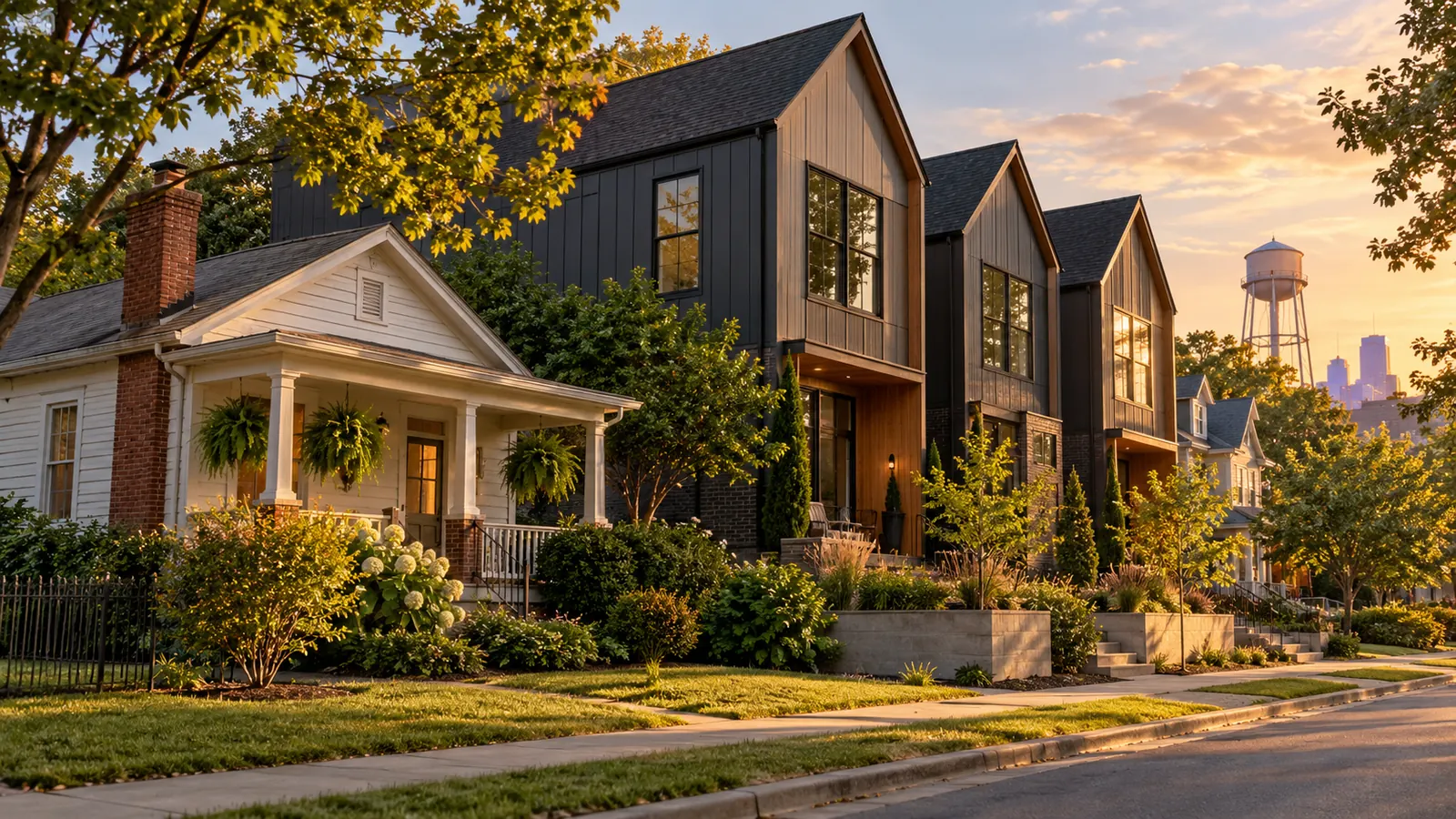
The Nations is a West Nashville neighborhood of grid streets around Robertson Avenue, between Charlotte Avenue and the Cumberland River. For decades it was a modest area of small cottages near industry and rail lines. More recently many older houses have been replaced by new ones, often two tall, narrow homes on a lot that once held one cottage, and Metro’s planning documents describe the area as one in transition toward a mixed-use neighborhood.
What the community plan says
The West Nashville Community Plan, part of the countywide NashvilleNext plan, sets the direction for zoning. Metro lists several supplemental policies that touch The Nations and its edges:
| Policy | What it does |
|---|---|
| Mobility and connectivity (adopted February 18, 2022) | Calls for added infrastructure and complete streets so the area can become a vibrant mixed-use neighborhood |
| Robertson Avenue area | Sets a height limit for the mixed-use area |
| Rock Harbor Marina | Requires a substantial buffer between industrial businesses and homes along Robertson Avenue, with site access designed to avoid industrial traffic |
| Charlotte Avenue Corridor Plan | A starting point for zone changes and investment along Charlotte |
Taken together, these policies describe a place in transition: the city expects more homes and shops, but industry remains nearby and streets still need sidewalks and better connections.
Living next to industry
Industry is part of the neighborhood’s history and its present. The Rock Harbor policy exists precisely because homes and industrial businesses sit close together. Before you buy, drive the area on a weekday morning and listen for trucks and rail. Tennessee’s disclosure law requires sellers to describe the property’s condition; a Metro Council resolution from 2006 noted that the form already covered hazards such as landfills on the property and flooding problems, and asked lawmakers to require disclosure of nearby hazards too. In practice, nearby uses are something you need to check yourself.
Richland Creek and flood risk
Richland Creek runs through this part of West Nashville. In May 2010 it crested at 19.99 feet, almost five feet above its 1979 flood level, according to the National Weather Service. Since then, the Corps of Engineers has built a detailed model of the Richland Creek basin, dividing it into smaller basins to route rainfall and predict flooding, which helps warnings.
- Check the address on FEMA flood maps and Metro’s Parcel Viewer, which shows regulated floodplains and elevation certificates.
- Remember Metro’s warning that properties outside the mapped flood areas are not guaranteed to be safe.
- Ask about flood insurance even if the lender does not require it; standard homeowners policies do not cover flooding.
If you are buying a new house near the creek, ask for its elevation certificate. Metro requires new homes in the floodplain to have the lowest finished floor four feet above the 1 percent annual chance flood elevation. More is in Flood Risk When Buying in Nashville: Lessons From May 2010.
Getting around
Many residents drive, but WeGo Public Transit runs local buses across the county. Through its Journey Pass program, eligible Davidson County residents can ride WeGo local and regional buses, WeGo Access and WeGo Star free for three years, using a registered QuickTicket card. If you rely on buses, check the routes and frequency near the house before you buy, since streets in a changing area may not yet have sidewalks to reach a stop.
Buying new construction
Much of what is for sale in The Nations is new. A few questions help:
- Is the house one of two on a divided lot, and is it under a horizontal property regime with shared rules?
- Who handles drainage between the two houses, and where does roof water go?
- What warranty does the builder offer, and were permits closed out with Metro Codes?
- Is a short-term rental possible? New non-owner-occupied permits are not allowed in R and RS residential zoning, and owner-occupied permits in two-family zoning require one owner who lives in one of the units.
Tip: Pull the permit history for the address on Metro Codes’ public records before you close. It shows what was permitted and inspected.
Taxes
New construction is appraised when it is finished. The Assessor of Property explains that a building completed between January 1 and September 1 receives a prorated assessment for the rest of that year. In a neighborhood where many homes are new, ask whether the seller’s last tax bill reflects the finished house or only the land. See Davidson County Property Taxes: How Your Nashville Tax Bill Is Figured.
Who it suits
The Nations suits buyers who want a newer house close to downtown and West End, enjoy a neighborhood still being built and are comfortable with industry nearby. Buyers who want an established, settled street might compare it with Buying a Home in East Nashville: Edgefield, Lockeland Springs and Shelby Park or the suburban areas farther out.